
The Digital Revolution Powering Western Europe's Data Center Boom
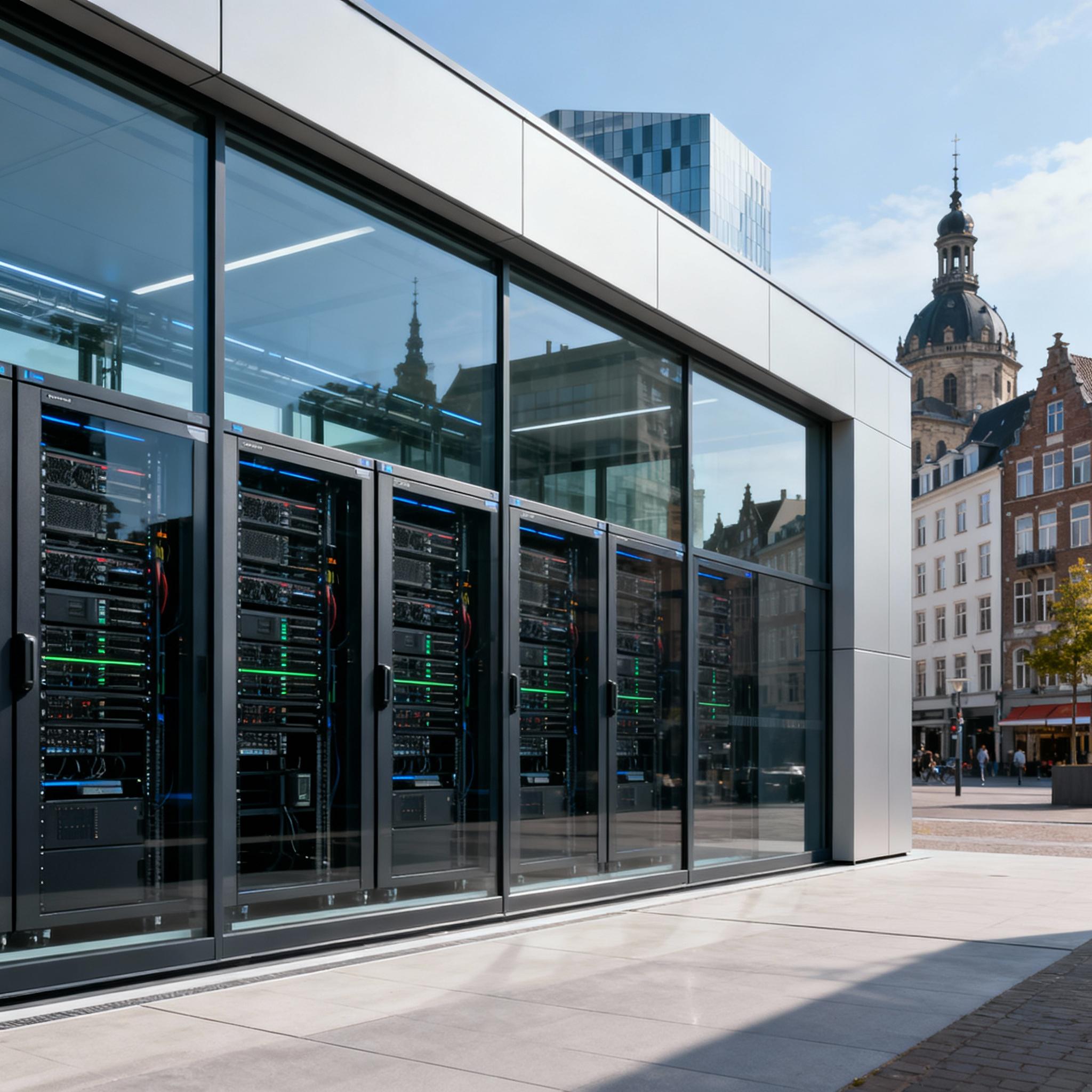
The data center industry across Western Europe is undergoing a fundamental transformation driven by artificial intelligence. As the market accelerates from $6.90 billion in 2023 toward a projected $10.35 billion by 2029, AI workloads are emerging as the dominant force reshaping infrastructure requirements, investment strategies, and operational approaches.
The AI Infrastructure Challenge
Artificial intelligence applications demand vastly different infrastructure than traditional computing workloads. Training large language models and running generative AI applications require enormous computational power concentrated in smaller physical spaces. This creates unprecedented power density challenges that conventional data center designs struggle to accommodate.
Major colocation operators across Western Europe are responding with aggressive infrastructure retrofitting programs. Equinix, Vantage Data Centers, Data4, and Virtus Data Centres have announced plans to transform existing facilities specifically for AI requirements. Data4's strategy exemplifies this shift, with plans to retrofit facilities in Frankfurt delivering 180 megawatts alongside two Paris locations providing 120 megawatts and 250 megawatts respectively.
These retrofits involve more than simple upgrades. They require fundamental redesigns of electrical distribution systems, cooling infrastructure, and network architectures. The goal is creating environments where AI workloads can operate efficiently while managing the intense heat generation that accompanies high-density computing.
Know More: Western Europe Data Center Colocation Market - Industry Outlook & Forecast 2024-2029
Power Consumption Reality
The energy requirements of AI workloads present both technical and political challenges. As generative AI adoption accelerates across enterprises and consumer applications, power consumption projections have forced uncomfortable conversations about grid capacity and sustainability commitments.
In the United Kingdom, approximately 71% of public sector departments have already transitioned from traditional data centers to cloud infrastructure. This migration, combined with AI adoption, creates compounding demand on electrical grids already stretched by broader electrification trends and renewable energy integration.
Major metropolitan areas like London face particularly acute constraints. Some regions will not have adequate electrical capacity to support new data center construction until 2035. This reality is forcing operators to make difficult choices about where and how to deploy AI-capable infrastructure.
Geographic Implications
The Frankfurt, London, Amsterdam, Paris, and Dublin markets, collectively known as FLAPD, have historically dominated European colocation. However, AI infrastructure requirements are accelerating the exploration of alternative locations.
Dublin's situation illustrates the challenge. Grid restrictions have created a de facto moratorium on new data center development, despite strong demand from hyperscalers and enterprises seeking European presence. This has pushed investment toward other Irish locations and entirely different countries with available power capacity.
Secondary markets are benefiting from these constraints. Operators are increasingly evaluating locations based on power availability rather than traditional connectivity or proximity advantages. Special Economic Zones and areas with abundant renewable energy resources are attracting attention from developers seeking to build next-generation AI-capable facilities.
Cooling Innovation
Managing heat from AI workloads requires advanced cooling approaches beyond conventional air conditioning. While Western Europe's oceanic climate provides natural advantages for free cooling strategies, the extreme power densities of AI infrastructure often demand more sophisticated solutions.
Liquid cooling technologies are gaining traction for AI-specific deployments. Liquid immersion cooling, where computing components are submerged in thermally conductive fluids, can handle power densities that would overwhelm air-based systems. Direct-to-chip liquid cooling represents another approach, bringing coolant directly to heat-generating processors.
These technologies require significant infrastructure investment and operational expertise. However, they enable the power densities necessary for competitive AI infrastructure while potentially improving energy efficiency compared to air cooling at similar densities.
Sustainability Tensions
The collision between AI growth and European sustainability commitments creates complex dynamics. The European Commission has established carbon neutrality targets for 2030, backed by increasingly stringent regulations like Germany's 2024 Energy Efficiency Bill.
Data center operators must demonstrate how AI infrastructure expansion aligns with these environmental goals. This involves multiple strategies: securing renewable energy through direct procurement agreements, implementing waste heat recovery systems, maximizing cooling efficiency, and strategic site selection in locations with clean energy advantages.
Some operators are exploring innovative approaches like partnering with district heating systems to utilize waste heat from AI workloads. While technically complex, such arrangements can transform environmental liabilities into community assets.
Market Dynamics
Investment activity reflects AI's transformative impact. Major players like Digital Realty, Equinix, and NTT Global Data Centers are committing significant capital to AI-ready infrastructure. Meanwhile, new entrants including CloudHQ, Digital Reef, and EdgeCore Digital Infrastructure are launching with strategies explicitly focused on AI workload requirements.
Customer demand is evolving rapidly. Enterprises across financial services, healthcare, manufacturing, and professional services are exploring AI applications requiring robust infrastructure support. Cloud providers are racing to secure capacity for their AI platforms, creating intense competition for suitable facilities.
This demand is occurring as vacancy rates in primary markets decline sharply. In 2023, consumption exceeded new inventory in FLAPD markets for only the second time in five years. This supply-demand imbalance is driving pricing increases and pushing customers toward alternative locations and creative capacity solutions.
Looking Forward
The AI transformation of Western Europe's data center landscape is accelerating rather than moderating. As models grow larger and applications multiply, infrastructure requirements will intensify. Successfully navigating this transition requires balancing explosive demand against power constraints, sustainability commitments, and community concerns.
Operators who can deliver AI-capable infrastructure while addressing environmental and social considerations will define the industry's next chapter. The market's growth trajectory toward $10.35 billion by 2029 reflects confidence that solutions exist, even if the path forward requires innovation, investment, and adaptation.
Know More: Western Europe Data Center Colocation Market - Industry Outlook & Forecast 2024-2029
