
How to Select Professional Medical Credentialing Services in Cali?

According to the U.S. Department of Health & Human Services (HHS), credentialing is the process of verifying a healthcare provider’s qualifications, including education, licensure, board certification, work history, references, and malpractice records. Now that we have understood what credentialing is, you must guess its importance, but anyway, still let’s talk briefly about it. No need to mention that this step is essential: it ensures that healthcare providers who treat patients or bill Medicare meet rigorous standards for competence and safety.
Regardless of its importance, the credentialing process is not that easy. Although the Centers for Medicare & Medicaid Services (CMS) outlines expected processing timelines, once a full application is submitted, review typically takes 45 days; however, if a site visit is required, that can extend to 45 additional days. These official timelines give medical practices a benchmark when evaluating how quickly a credentialing service can deliver.
Especially in the state of California, the credentialing process comes with added complexities that providers must navigate carefully. From payer backlogs to shifting regulatory requirements, these hurdles can create costly delays if not managed with precision.
Key Factors to Evaluate Credentialing Services in California
When choosing medical credentialing services California, focus on these five core dimensions:
1. Experience & Compliance Rigor
California’s healthcare environment has unique and ever-evolving standards due to its payers and regulatory bodies. A credentialing firm with solid local experience is better able to anticipate changes and prevent bottlenecks.
2. Process Transparency & Timeliness
Check whether the provider aligns with CMS benchmarks, 45 days for standard processing and up to 90 days if a site visit is needed.
The following are the steps of credentialing:
-
Preparation
-
CAQH Registration
-
Application submission
-
Verification
Healthcare providers should request clear estimates of turnaround for each of the stages, including application submission, primary-source verification, payer enrollment, and CAQH updates. It is crucial that the work is transparent, as transparency in reporting can avert delays and revenue loss.
3. Technical Infrastructure
The best services leverage modern, secure platforms, cloud-based portals, real-time progress dashboards, automated renewal alerts, and CAQH integration. These tools provide visibility and reduce human error. Ask whether providers support PECOS for Medicare and offer encrypted document storage with audit logs.
4. Scope of Services & Customization
A professional credentialing provider should be able to manage:
-
Application preparation and submission.
-
Primary-source verification, such as directly verifying licensure and education with state boards.
-
Enrollment with payers.
-
Follow-up, monitoring, re-credentialing, and license tracking.
Value increases when the service adapts to your needs, whether you're a solo provider, a multi-clinic group, or planning expansion. Transparent pricing models, such as upfront vs. subscription, itemized cost breakdown, ensure clarity.
5. Support, Reputation & Outcomes
Fast, knowledgeable support is critical for urgent corrections or inquiries. Review published success metrics and customer testimonials, especially turnaround times, error rates, and payer acceptance. Be wary of a lack of references or vague claims of performance.
Common Challenges in California Credentialing and How to Overcome Them
Credentialing in California comes with unique hurdles that can delay provider onboarding if not handled properly. One of the most frequent issues is extended turnaround times. While CMS sets a 45–90-day standard, California providers often face longer waits due to payer backlogs and state-specific documentation requirements. Choosing a credentialing partner that monitors applications daily and follows up proactively with payers can significantly reduce these delays.
Another challenge is CAQH profile management. Incomplete or outdated information in the CAQH database is a leading cause of rejections. Credentialing services that provide regular audits of CAQH profiles ensure your data is accurate, reducing resubmissions.
Regulatory changes also pose risks. California’s medical boards and insurers frequently update requirements for licensing, continuing education, or documentation formats. Credentialing firms with localized expertise stay on top of these changes, preventing compliance gaps.
Finally, communication breakdowns between providers, payers, and credentialing companies can stall applications. Establishing clear channels, phone, email, and secure portals keeps everyone aligned and accelerates the resolution of issues.
By anticipating these challenges and partnering with a service that offers technology-enabled tracking and regional expertise, California practices can protect revenue and ensure timely patient care.
What to Include in Your Evaluation Checklist
While looking for credentialing services in CA, here are two concise sections framed as practical checklists to guide your decision:
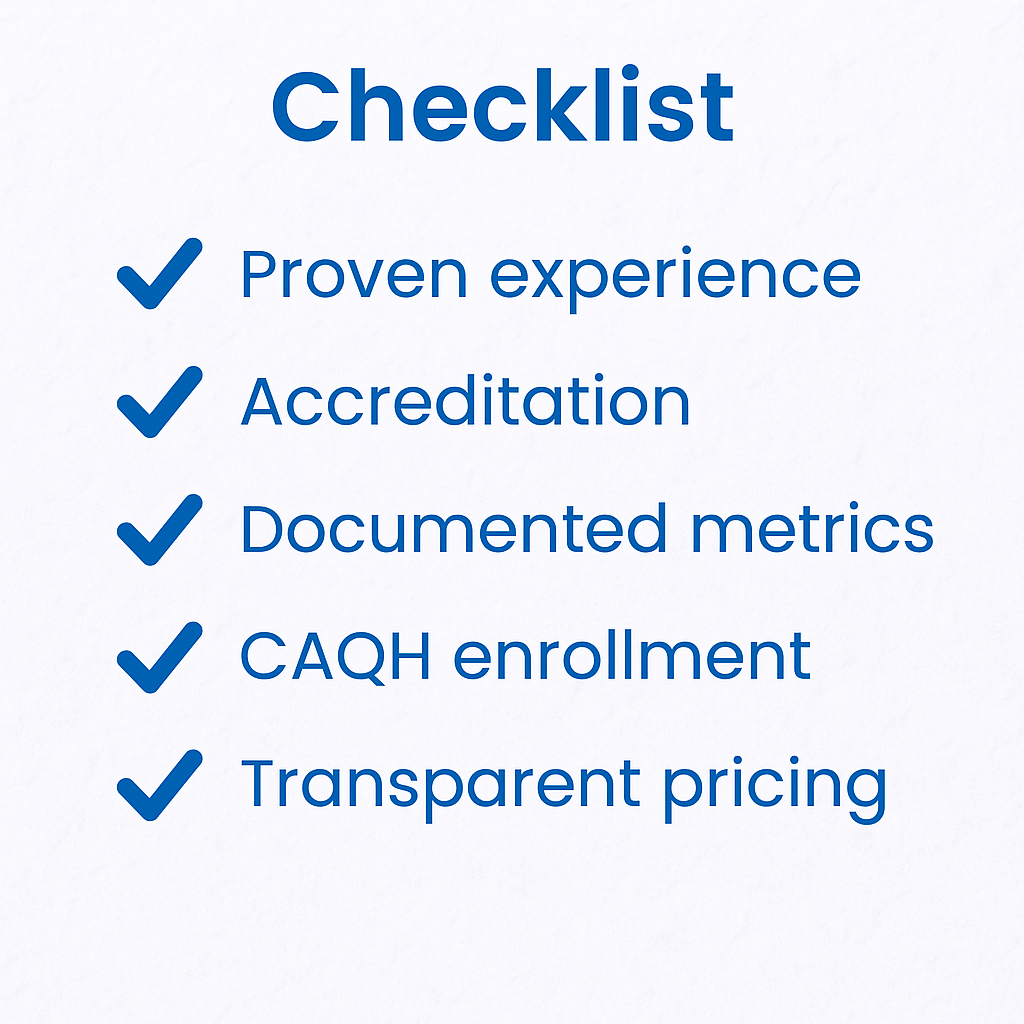
Checklist: Must-Have Criteria
-
Proven experience in credentialing for California-specific payers and healthcare systems.
-
Accreditation (e.g., NCQA, URAC) confirming regulatory compliance.
-
Documented turnaround metrics aligned with CMS timelines.
-
End-to-end service scope: from CAQH enrollment to re-credentialing.
-
Transparent, customizable pricing with no hidden fees.
-
Capacity to scale as your practice grows or changes.
Final Thoughts
Selecting the right medical credentialing services in California is more than administrative; it affects your ability to treat patients, receive timely reimbursement, and remain compliant.
Begin with providers that meet a high standard of local expertise, tech infrastructure, accountability, and transparency. Validate their performance using real benchmarks (e.g., CMS timelines), then ensure they match your practice model, whether a small clinic or an expanding multi-site network.
Outsourcing to a credentialing service brings clarity, efficiency, and growth potential, so you can focus on what matters most: patient care.
